Larch Creek Birds
What the birds (and frogs) are saying at a creek in western Washington

Bird
Barred Owl
Strix varia
Owls (Strigidae)
Year-round resident. Expected at the creek in every month.
- Field marks
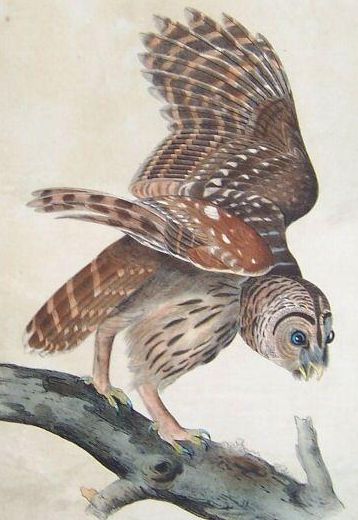
- A large, round-headed owl with no ear tufts, dark brown eyes, and brown-and-white barring across the chest and streaks down the belly: the face of someone who has just asked you a question and is prepared to wait.
- Male & female
- Alike; the female is larger.
- Voice
- 'Who cooks for you? Who cooks for you-all?' in a rich hooting rhythm, plus wild cackles and caterwauling when pairs duet, which can sound like monkeys and has alarmed many campers.
- Diet
- Mice, voles, squirrels, frogs, crayfish, birds; hunts from a perch at night and sometimes by day.
- Habitat
- Mature mixed forest near water, which describes a wooded creek exactly.
- Nesting
- A large natural cavity or old hawk nest; 2–3 eggs in March.
- Size
- 16–20 in long, a 3½-ft wingspan, 1–2¼ lb: about a bag of sugar, with the wingspan of a bath towel and the face of someone who cooks for you.
An eastern species that spread across Canada and arrived in Washington in the 1960s; it now competes with, and sometimes displaces, the Northern Spotted Owl.
Season how expected it is here, week by week
At the creek 10 calls on 3 days, first Oct 28, last Oct 31
Recordings
Clearest recording · Oct 31 5:16 am · 97% sure
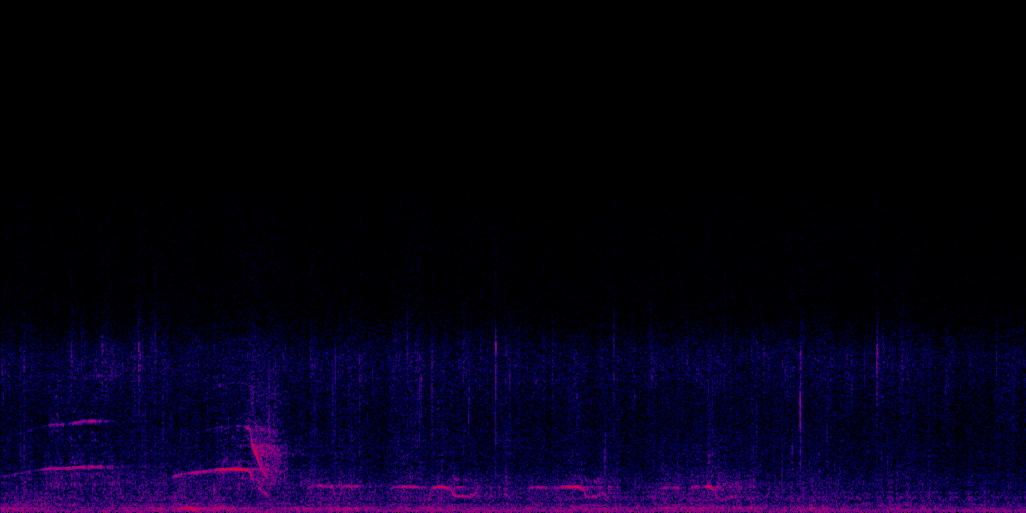
Recent · Oct 31 9:04 pm · 91% sure
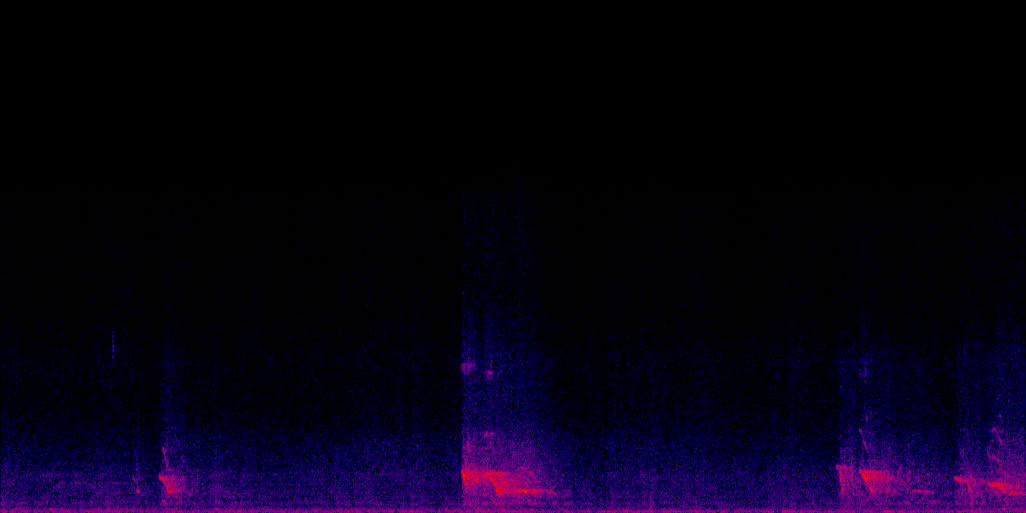
Recent · Oct 31 8:55 pm · 93% sure

Recent · Oct 30 8:54 pm · 94% sure

From the encyclopedia
The barred owl, also known as the northern barred owl, striped owl, or more informally, hoot owl or eight hooter, is a North American large species of owl. A member of the true owl family, Strigidae, they belong to the genus Strix, which is also the origin of the family's name under Linnaean taxonomy. Barred owls are largely native to eastern North America, but have expanded their range to the West Coast of North America, where they are considered invasive. Mature forests are their preferred habitat, but they can also acclimate to various gradients of open woodlands. Their diet consists mainly of small mammals, but this species is an opportunistic predator and is known to prey upon other small vertebrates such as birds, reptiles, and amphibians, as well as a variety of invertebrates.
From Wikipedia, "Barred owl", CC BY-SA 4.0.