Larch Creek Birds
What the birds (and frogs) are saying at a creek in western Washington

Bird
Blue Jay
Cyanocitta cristata
Crows, Jays, and Magpies (Corvidae)
Unexpected now
Not expected here. The range model gives this species almost no chance at the creek in any season. Treat these detections with suspicion.
- Field marks
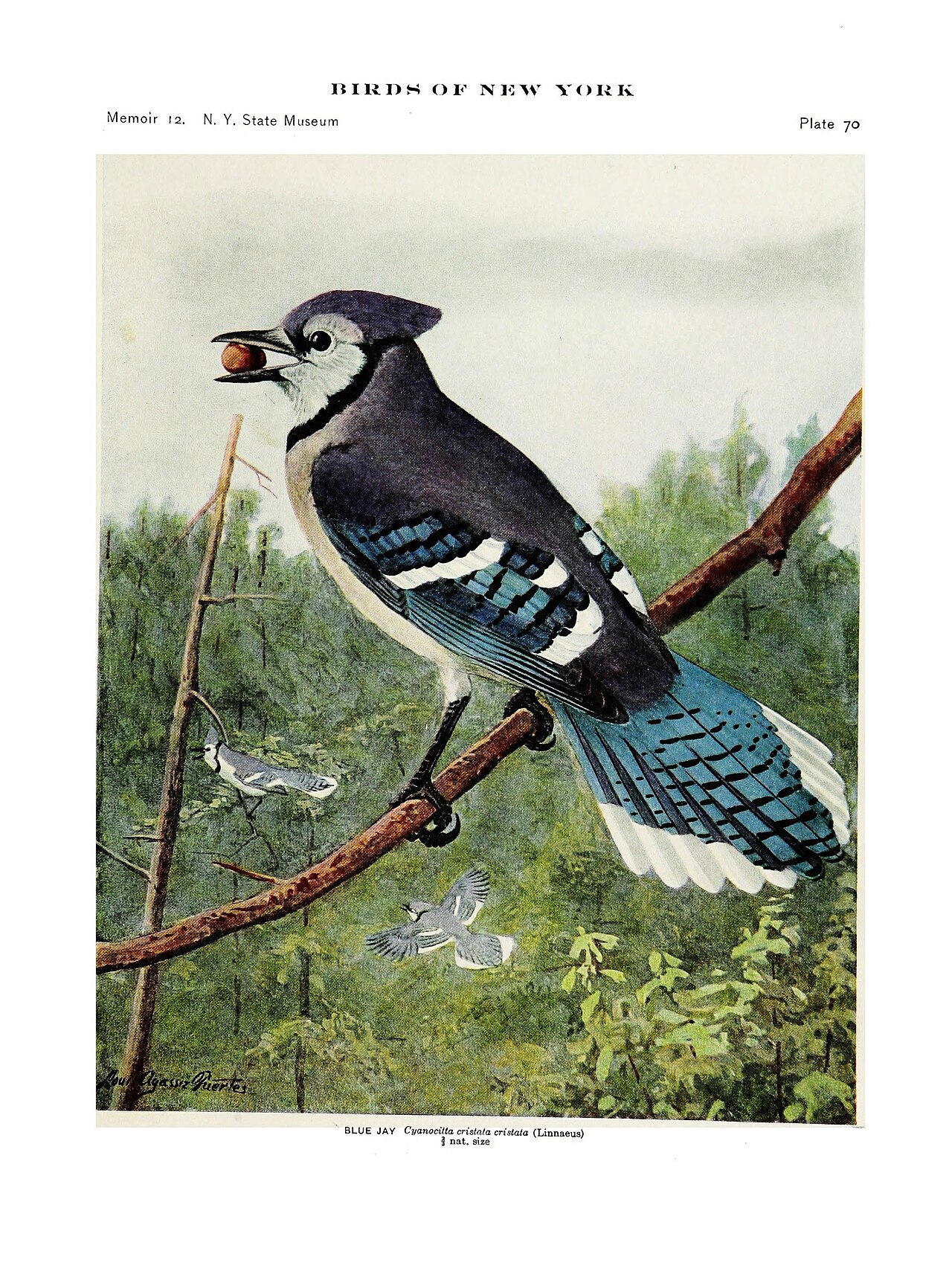
- A crested jay, blue above and white below, with a black necklace and bold white wing bars and tail tips.
- Male & female
- Alike.
- Voice
- Harsh 'jay! jay!', a liquid 'queedle', bell notes and hawk imitations.
- Diet
- Acorns and other nuts, seeds, insects, the occasional egg.
- Habitat
- Oak and mixed woodland of eastern and central North America; a rare visitor west of the Rockies.
- Nesting
- A cup of twigs in a tree; 3–6 eggs.
- Size
- 10–12 in long, 2½–3½ oz: about a bar of soap, bright blue and loud.
Genuinely rare in western Washington, although a few turn up most winters. Steller's Jays make similar calls, so these detections deserve a listen before anyone phones a birding hotline.
Season how expected it is here, week by week
At the creek 10 calls on 3 days, first Oct 29, last Oct 31
Recordings
Clearest recording · Oct 31 10:56 am · 95% sure
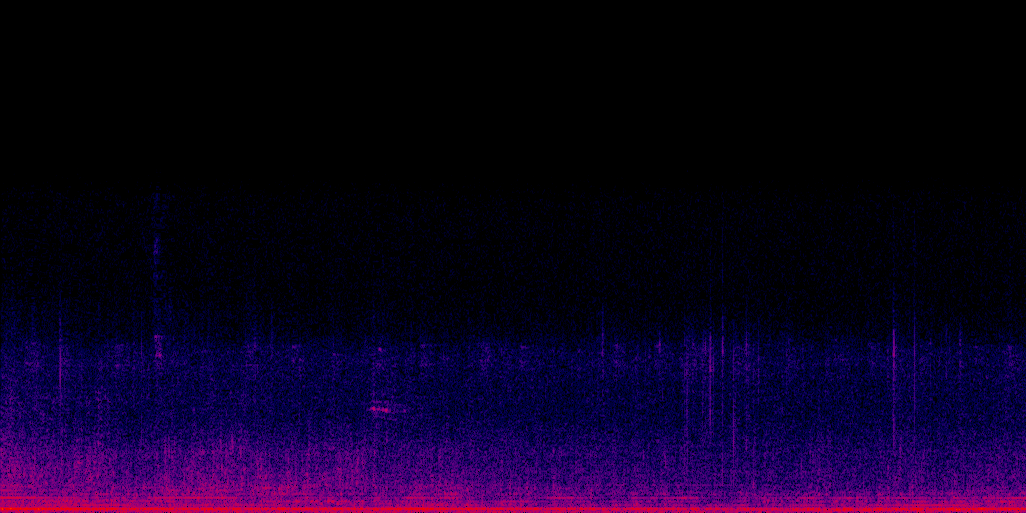
Recent · Oct 31 4:14 pm · 88% sure
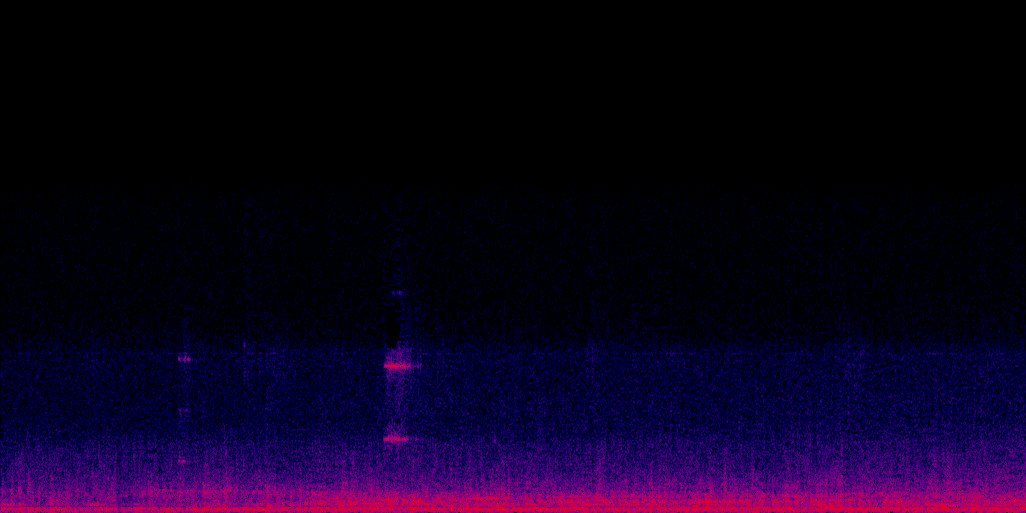
Recent · Oct 29 1:27 pm · 93% sure

From the encyclopedia
The blue jay is a passerine bird in the family Corvidae, native to eastern North America. It lives in most of the eastern and central United States; some eastern populations may be migratory. Resident populations are also in Newfoundland, Canada; breeding populations are found across southern Canada. It breeds in both deciduous and coniferous forests, and is common in residential areas. Its coloration is predominantly blue, with a white chest and underparts, and a blue crest; it has a black, U-shaped collar around its neck and a black border behind the crest. Males and females are similar in size and plumage, which does not vary throughout the year. Four subspecies have been recognized.
From Wikipedia, "Blue jay", CC BY-SA 4.0.