Larch Creek Birds
What the birds (and frogs) are saying at a creek in western Washington
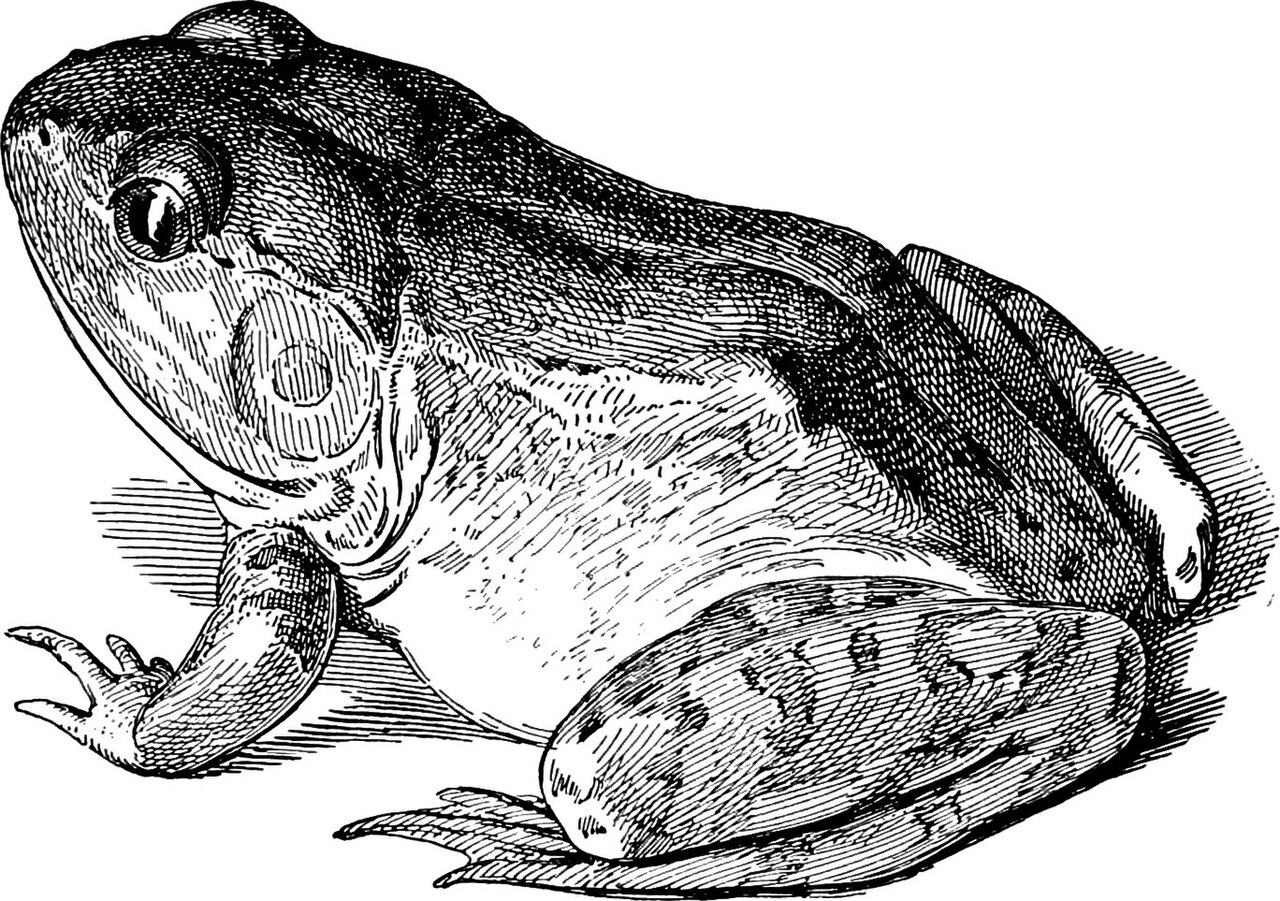

Frog
American Bullfrog
Lithobates catesbeianus
Ranidae
Frog
Summer visitor. Expected here roughly Apr to Sep.
- Field marks
- A huge green to brown frog with an eardrum bigger than its eye (in males) and no ridges down the back.
- Male & female
- Males have a yellow throat and larger eardrums; females are bigger overall.
- Voice
- The deep 'jug-o-rum' bellow of males on warm nights from late spring to midsummer, like a tuba with a cold.
- Diet
- Anything that fits in its mouth, which is a larger category than you would think: insects, other frogs, small snakes, ducklings, mice.
- Habitat
- Permanent ponds and slow water with plenty of vegetation.
- Nesting
- Floating egg masses of up to 20,000 eggs in early summer; the tadpoles take up to two years to transform, which they do without any evident hurry.
- Size
- Up to 8 in long and 1½ lb: the size of a dinner plate and the weight of a can of chili. The largest frog in North America.
Native to the eastern US and introduced here, where it eats native frogs and generally behaves like a guest who has moved in. Mostly silent in autumn; October detections may be another sound.
Season how expected it is here, week by week
At the creek 3 calls on 2 days, first Oct 29, last Oct 31
From the encyclopedia
The American bullfrog, often simply known as the bullfrog in Canada and the United States, is a species of large frog in the family Ranidae. The species is native to eastern North America. It typically inhabits large permanent water bodies such as swamps, ponds, and lakes. The bullfrog can also be found in manmade habitats such as pools, koi ponds, canals, ditches, reservoirs and culverts. The bullfrog gets its common name from the sound the male makes during the breeding season, which sounds similar to a bull bellowing. It is a generalist carnivore, consuming a wide variety of prey. In turn, it is eaten by predators such as alligators, snakes, and birds.
From Wikipedia, "American bullfrog", CC BY-SA 4.0.